
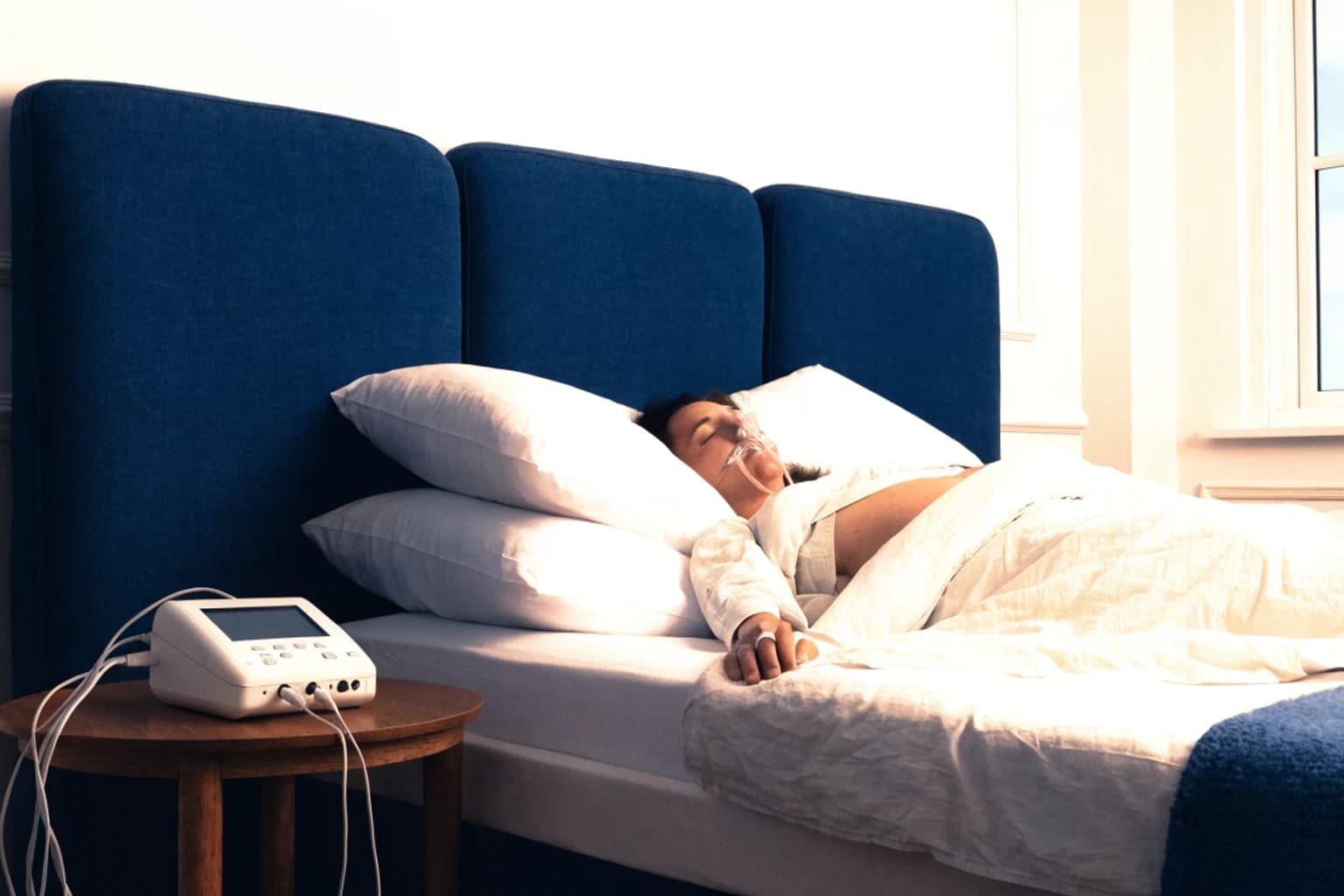
What is sleep apnea?
Sleep apnea is a disorder in which breathing repeatedly stops and restarts during sleep. These episodes can lower oxygen levels and fragment sleep even when the person does not remember waking up. The result may be unrefreshing sleep, daytime fatigue, and reduced alertness.
Obstructive sleep apnea is the most common form and occurs when the upper airway repeatedly narrows or closes. Central sleep apnea has a different mechanism involving the signals that control breathing. Snoring alone does not establish the diagnosis; medical assessment and, when indicated, a sleep study are needed.
What are the signs of sleep apnea?
Typical signs include frequent loud snoring, breathing pauses noticed by a partner, and waking up gasping or choking. During the day, a person may experience tiredness, sleepiness, difficulty concentrating, or morning headaches. Dry mouth, insomnia, and frequent nighttime urination may also occur.
Discuss your symptoms with a clinician if you notice one or more of the following:
- breathing repeatedly stops and restarts during sleep;
- snoring is accompanied by gasping or choking;
- you wake unrefreshed despite adequate time in bed;
- you unintentionally fall asleep during the day or struggle to stay alert while driving;
- difficult-to-control high blood pressure accompanies sleep symptoms.
Screening questionnaires can estimate risk, but they do not confirm sleep apnea. Our frequently asked questions also explain consultation and booking basics.
Why does assessment matter?
Untreated sleep apnea can affect attention, memory, and reaction time. The NHLBI also notes that untreated sleep apnea increases the risk of serious health problems, including heart attack and stroke. Individual risk depends on severity and other health conditions, so an online symptom list cannot replace medical evaluation.
Do not drive when significant sleepiness makes it difficult to stay alert. Severe breathlessness, chest pain, or another medical emergency requires urgent local emergency care.
How is sleep apnea diagnosed?
Assessment covers nighttime and daytime symptoms, medical history, medication, and risk factors. A clinician may recommend sleep monitoring at home or in a sleep laboratory, depending on the clinical situation. The study records parameters such as breathing, oxygen levels, and respiratory events, and the result must be interpreted in context.
Before the appointment, it helps to note:
- when snoring, breathing pauses, or fatigue began;
- what a bed partner has observed;
- current conditions and medication;
- previous sleep-study results or PAP device data;
- situations in which daytime sleepiness occurs.
What solutions are available?
Treatment depends on the type and severity of sleep apnea, symptoms, airway anatomy, and associated conditions. It may include lifestyle measures, positive airway pressure, oral devices, or other clinician-recommended options. CPAP provides constant pressure to help keep the airway open during sleep.
Overnight sleep study and CPAP titration help assess breathing during sleep and select an appropriate pressure. Mask discomfort, dryness, air leaks, or persistent symptoms should be discussed with the clinician using device data; settings should not be changed at random.
Where can you request an assessment in Arad?
Dr. Teaha Cristina provides pulmonology and sleep medicine consultations in Arad and Chișineu Criș. Review the Arad practice, medical services, or use online booking.
Medical sources
Editorial and medical review: Dr. Teaha Cristina. Last updated: 17 July 2026.
Book appointment